What New Brunswick's $461 Million Infrastructure Deal Means for Greater Moncton
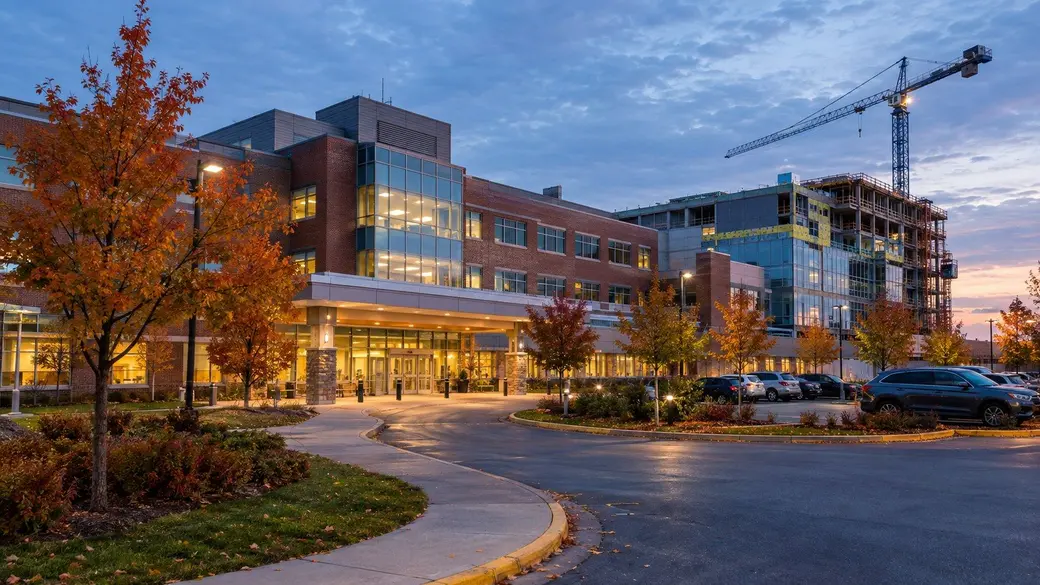
The first project named under New Brunswick's new $461 million infrastructure agreement with Ottawa is in Moncton. On September 25, federal and provincial ministers stood in the Dr. Georges-L.-Dumont University Hospital Centre and announced that the hospital's new endoscopy suite would be the first thing the money builds.
That headline is about health care. The larger part of the agreement is not. Roughly two thirds of the federal money is set aside for housing and post-secondary projects over the next ten years, and the province signed a commitment that bears directly on what new homes cost to build. For anyone buying or selling in Greater Moncton, that is the part worth understanding.
What was announced
The agreement falls under the provincial and territorial stream of the federal Build Communities Strong Fund, launched in April 2026. New Brunswick's allocation is $461 million in federal money, and the province is required to match what Ottawa puts in. It is split two ways:
More than $155 million goes to health infrastructure over three years. More than $305 million goes to housing and post-secondary education over ten years.
The two projects named so far are both at the Dumont hospital on Université Avenue. More than $11 million in federal money goes to a 13,800 square foot renovation that creates 12 endoscopy rooms, and $500,000 goes to planning a future redevelopment of the hospital's emergency, oncology and obstetrics departments. Including provincial money, Global News reported $25.7 million for the endoscopy project and $1 million for the planning work.
The province and Vitalité Health Network first announced the endoscopy suite last November, budgeting up to $30 million for it. The hospital currently has seven procedure rooms, so the new suite adds five and, by Vitalité's estimate, room for about 2,500 more digestive endoscopies a year. Completion is targeted for summer 2029.
Following where Moncton is investing?
Public capital tends to arrive before private demand shows up in prices. If you are weighing a move to Greater Moncton, the useful next step is seeing what is on the market today.
Save the search on that page to get new listings by email. For questions about a specific neighbourhood, Candace McKay answers directly.
Why a hospital announcement belongs on a real estate blog
An endoscopy suite will not move a single home price. What it does is add capacity in a region that has been growing faster than almost anywhere in the country.
Statistics Canada estimates the Moncton census metropolitan area reached 196,143 people on July 1, 2025, up 2.9% in a single year. That tied Calgary for the second-fastest growth rate of Canada's 41 metropolitan areas, behind only Edmonton. Growth at that pace puts pressure on everything a household depends on, and health care is usually the first thing people ask about.
Anyone who has helped a family relocate here knows the order of questions. Schools, commute, and then, almost always, doctors and hospitals. For buyers coming from Ontario or elsewhere in Canada, visible investment in the region's hospital capacity answers a question that no listing description can. The $500,000 for emergency, oncology and obstetrics planning is small, but it puts the larger redevelopment Vitalité has been pushing for on the funded path. That is the item to watch.
The bigger number is the housing money
The $305 million housing and post-secondary envelope has no projects attached yet. Under the federal program rules, the housing side is for housing-enabling infrastructure: water and wastewater systems, roads, bridges, transit and community facilities.
In Greater Moncton, that is exactly the kind of spending that decides where new neighbourhoods can go. Pipe capacity and road access, not demand, are usually the binding constraint on a new subdivision. The region has already seen this play out. The Elmwood Drive sewer and stormwater project, more than $25 million announced in August, was tied directly to up to 1,300 future housing units, and the Dieppe Boulevard extension is set to open land that could not be developed without it.
Ten years of dedicated federal and provincial money for that category is a meaningful tailwind for new supply. How much of it reaches Moncton, Dieppe and Riverview depends on which projects the province puts forward. New Brunswick must also direct at least 20% of its allocation to rural, northern and Indigenous communities, so not all of it will go to the cities.
The condition most people will miss
As part of the agreement, New Brunswick committed to encouraging housing development by not increasing any fees or taxes that hinder housing supply. The federal program is explicit about what that targets. Provinces are expected to act on construction costs, including reducing development charges where they are a barrier to building.
For new-build buyers, that matters. Development charges and similar levies are paid by the builder and passed through in the price of the home. In markets that lean heavily on them, such as the Greater Toronto Area, they can add tens of thousands of dollars to a new house. Greater Moncton is not one of those markets. Moncton applies development charges only in a few specific growth areas rather than city-wide, so the local effect of the commitment is modest. Its value is as a direction: a signed provincial commitment not to add new fees to the cost of building, at a time when growing municipalities everywhere are looking for ways to pay for growth.
What it means for buyers and sellers
If you are buying new construction, the practical takeaway is that the policy direction is working in your favour. Servicing money is coming, and the province has committed not to add fees or taxes that hinder housing supply. Neither guarantees lower prices, since land, labour and materials still drive most of the cost, but both remove reasons for prices to climb faster.
If you own an existing home, particularly near the areas where servicing is being extended, more infrastructure spending generally supports values over time. New supply can moderate price growth, but better access and amenities often more than offset it.
If you are relocating, add the Dumont investment to the list of things that are improving, alongside the practical steps in our guide to relocating to New Brunswick. Summer 2029 is a long way off for the endoscopy suite, but the direction of travel matters when you are choosing where to settle for the next decade.
What to watch next
Three things. First, the housing project list. The province has ten years to allocate the $305 million, and the first announcements will show whether Greater Moncton's growth corridors are near the front of the queue. Second, the Dumont emergency, oncology and obstetrics planning work, which is the first step toward the much larger redevelopment. Third, how New Brunswick delivers on the fee commitment in practice, particularly as municipalities weigh how to pay for the growth they are approving.
The first project under the agreement went to Moncton. That is a good place to start.
Sources: Housing, Infrastructure and Communities Canada news release of September 25, 2026; Prime Minister's Office release of April 7, 2026 launching the Build Communities Strong Fund; Government of New Brunswick release of November 6, 2025 and Vitalité Health Network release of November 7, 2025 on the Dumont endoscopy suite; Government of Canada release of August 11, 2026 on Elmwood Drive; City of Moncton development charges information; Global News reporting of September 25, 2026; Statistics Canada Table 17-10-0148-01, population estimates by census metropolitan area. Federal figures are as published: $461.442 million total, more than $11 million and $500,000 for the two Dumont projects. Project timelines are Vitalité's estimates and may change.
Categories
Recent Posts