
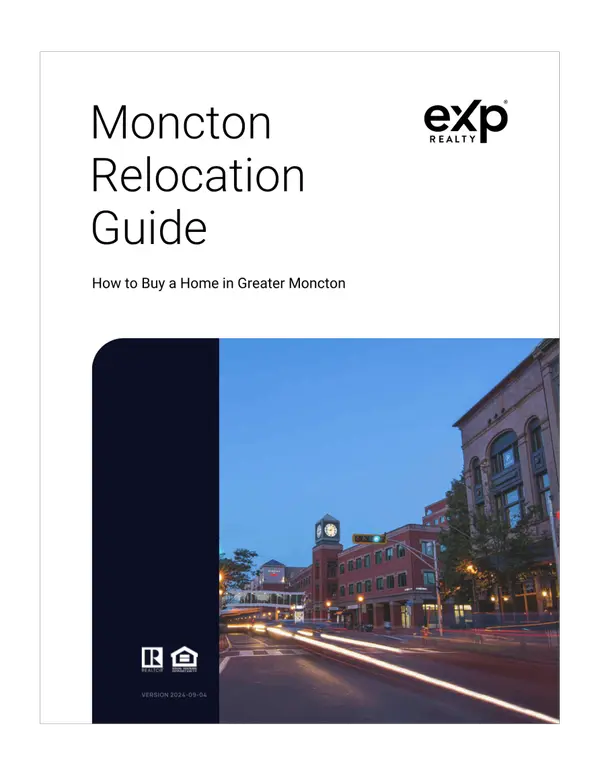
Moncton Relocation Guide
A step-by-step guide to relocating to Moncton, Dieppe, and Riverview. Learn how to prepare financially, understand local neighbourhoods, navigate inspections and offers, and move with confidence to New Brunswick.
Delivered instantly to your inbox. No spam, ever.
Relocating to New Brunswick
(Why don't you live here already?)
Why I Moved to New Brunswick, and Why You Should Consider It Too
In 2021, my family and I made the decision to leave Ontario and start a new chapter in Moncton, New Brunswick. I had spent years working in Ottawa and Toronto real estate, two of the most competitive and expensive markets in Canada. The move was not impulsive. It was strategic. We were looking for a place where we could buy a home without stretching our finances to the limit, where our kids could grow up with space and community around them, and where the pace of life made sense for how we actually wanted to live.
Moncton delivered on all of it. And after helping dozens of families make the same move from Ontario, Alberta, British Columbia, and beyond, I can tell you that the transition is smoother than most people expect when you have the right information and the right support on the ground.
What Your Ontario Home Buys in Greater Moncton
Most people weighing this move already know roughly what their current house is worth. The more useful number is what that figure buys here. These are July 2026 averages.
Greater Toronto Area: about $1 million. Moncton: about $384,000. Difference: roughly $620,000.
Ontario, province-wide: about $797,000. Moncton: about $384,000. Difference: roughly $414,000.
Ottawa: about $683,000. Moncton: about $384,000. Difference: roughly $300,000.
New Brunswick province-wide averages about $355,000. Moncton sits above that because it is the regional economic hub.
The number that matters is the one on the right, because it is not theoretical. It is the gap between what you sell for and what you buy for, before moving costs and legal fees. For a household selling at the Greater Toronto average and buying at the Moncton average, that gap is larger than the price of an entire average New Brunswick house.
In practice that difference tends to get used one of three ways. Some buyers arrive without a mortgage at all. Some arrive with a much smaller one and a monthly payment that changes what the rest of their budget looks like. Others buy more house than they could have justified in Ontario and invest the remainder.
What you should not assume is that a lower price means a smaller home. At the Moncton average you are generally looking at a three or four bedroom detached house on a full lot, not a condominium or a townhouse.
What It Costs to Own Here
Moncton's 2026 residential property tax rate is $1.3614 per $100 of assessed value, unchanged from last year. On a home assessed at the city average, about $384,000, that is roughly $5,200 a year. Owner-occupied homes pay the municipal rate only. Property tax is calculated on assessed value, which is not always the same as the price you paid.
The reason owner-occupied homes pay only the municipal rate is the Residential Property Tax Credit. New Brunswick also levies a provincial residential rate of $0.5617 per $100, and that credit reduces it to zero on your principal residence. A home that is not your principal residence does not get the credit, which is worth knowing if you buy here before you actually move. Assessment increases are separately capped at 10 percent a year under the province’s Spike Protection Mechanism.
Price figures are July 2026 averages from CREA and local real estate board data. Property tax rate from the City of Moncton 2026 budget.
What It Costs to Close
New Brunswick charges a Real Property Transfer Tax of a flat 1 percent, calculated on the greater of the purchase price or the assessed value. On a home at the Moncton average, about $384,000, that is roughly $3,800. There is no graduated scale, and no municipality in New Brunswick adds a land transfer tax of its own on top of it.
That is where the arithmetic turns in your favour if you are selling in Ontario, because there the provincial land transfer tax and, inside Toronto, a municipal one are charged on the same purchase. We worked through the full comparison, and what the move does to your annual running costs, in moving from Ontario to New Brunswick.
Transfer tax rate per the Real Property Transfer Tax Act, section 2. Provincial residential rate and the tax credit per the Government of New Brunswick.
Your First Months Here: The Sequence That Catches People
The housing math is the easy part of this move. The logistics have one piece of timing in them that almost nobody plans for, and it is worth knowing before you pick a moving date.
Your driver’s licence
New Brunswick expects you to exchange an out-of-province licence as soon as you take up residence here. There is no grace period written into the rule, so treat it as a first-week task rather than something to get to eventually. You surrender your existing licence, complete an application, and bring proof of identity and residency. Students are the one exception: you can keep your home licence while you are in school, but the moment you take up permanent residence or start working, you exchange it.
Medicare, and the three month gap
This is the one that surprises people. New Brunswick Medicare coverage does not begin the day you arrive. It begins on the first day of the third month following the month you establish residence. Move on 20 July and your coverage starts 1 October. The waiting period is legislated under the province’s Medical Services Payment Act, so it is not something that can be waived or accelerated.
The fix is straightforward if you know about it in advance. Contact your former province before you leave and confirm your existing coverage stays active through the gap. Most provinces continue to cover you for a defined period after you move for exactly this reason, and the Government of New Brunswick specifically recommends making that call. The problem is only a problem for people who find out about it in October.
Getting a family doctor, and why the order matters
New Brunswick runs a central registry called Patient Connect NB. To register you need a valid New Brunswick Medicare card and you have to be living in the province. You cannot join it from Ontario while you are still packing.
Put those two rules together and the sequence becomes clear. You arrive, you wait roughly three months for your Medicare card, and only then does your name go on the family doctor list. If someone in your household has ongoing care needs, that is worth building into your timing rather than discovering after the fact. It may mean scheduling appointments in your current province before you go, arranging prescription supply to cover the transition, or simply choosing a moving month that puts the least strain on that window.
None of this is a reason not to make the move. It is a reason to sequence it properly. I raise these with clients months before they become a problem, because they are obvious in hindsight and invisible in advance. For a fuller walkthrough of the buying side of an out-of-province purchase, see the complete guide for out-of-province buyers.
Driver’s licence and Medicare requirements per the Government of New Brunswick. Patient Connect NB eligibility per the GNB Patient Connect frequently asked questions. Rules and waiting periods can change, so confirm current requirements with Service New Brunswick before you finalise your dates.
Where Should You Live? Comparing Moncton, Dieppe, and Riverview
This is the first question every relocating buyer asks, and the answer depends entirely on your priorities. All three communities are within 10 to 20 minutes of each other, but they offer meaningfully different lifestyles.
Moncton
Moncton is the regional hub. It has the widest range of housing stock, from character homes in the North End to newer builds in the northwest subdivisions near Wheeler Park and Mapleton. Downtown Moncton is growing with new restaurants, shops, and condos. The city is officially bilingual, and you will find services, schools, and employers operating in both English and French. Moncton is the best choice for buyers who want urban convenience, variety in housing options, and proximity to the majority of regional employers in healthcare, education, and transportation.
Dieppe
Dieppe is the fastest-growing municipality in the region and one of the most sought-after communities for families. It has newer construction, well-maintained parks and trail systems, a strong francophone culture, and excellent schools in both languages. Neighbourhoods like Fox Creek, Chartersville, and Dover offer modern homes with larger lots. Dieppe is the right fit if you prioritize newer builds, walkability, French-language schooling, and a community that feels established but still expanding.
Riverview
Riverview sits on the south side of the Petitcodiac River and offers a quieter, more residential feel than Moncton or Dieppe. It has strong schools, excellent walking trails, and a tight-knit community atmosphere. Housing tends to be a mix of 1980s to 2000s-era homes with some newer infill. Riverview works well for buyers who want a suburban feel, good schools, and easy access to Moncton without living in the city itself.
Beyond the Tri-Cities
If you are open to a short commute in exchange for more land and a lower price point, communities like Shediac (20 minutes east, known for Parlee Beach and waterfront living), Memramcook (15 minutes south, a quiet rural community), and Salisbury (20 minutes west) offer excellent value. I help buyers evaluate whether the tradeoff between commute time and property cost makes sense for their situation.
What Relocating Buyers Need to Know About the Market
Greater Moncton remains one of the most affordable urban real estate markets in Canada. The average home price is significantly lower than Halifax, Ottawa, or any major Ontario city. But the market is not as slow or passive as some people assume. Well-priced homes in desirable neighbourhoods can sell within days, and out-of-province buyers who are not prepared to move quickly can lose out to local competition.
I publish monthly market updates with real data on pricing, inventory, and absorption rates so you can track the market before you arrive. For a deeper look at where prices may be heading, read my Moncton housing market forecast.
Your Relocation Roadmap
Step 1: Research Communities and Define Your Priorities
Before you start looking at homes, get clear on what matters most: commute time, school zones, lot size, walkability, budget, language preference, and proximity to services. I provide personalized neighbourhood recommendations based on your priorities and help you understand the differences that do not show up on a Google search.
Step 2: Get Pre-Approved and Start Your Home Search
Whether you plan to rent temporarily or buy immediately, mortgage pre-approval sets the foundation. I can connect you with lenders experienced in working with out-of-province buyers. From there, I set up a customized home search and we begin viewing properties virtually or in person, depending on your timeline.
Step 3: Make an Offer and Close Remotely
Many of my relocation clients purchase homes without being physically present for every step. Virtual walkthroughs, digital document signing, and local representation during inspections make remote purchases straightforward. I coordinate the entire process between you, the lender, the inspector, and the lawyer. For a detailed look at how this works, read the story of a recent remote purchase I managed in Dieppe.
Step 4: Set Up Your Life in New Brunswick
Once your home is secured, the administrative transition is straightforward. Here is what you need to arrange after closing:
Utilities: Electricity through NB Power, natural gas through Enbridge Gas NB, internet through Bell Aliant or Rogers (varies by address).
Vehicle and licence: Visit Service NB to register your vehicle and transfer your driver's licence. This should be done within 90 days of establishing residency.
Healthcare: Apply for your New Brunswick Medicare card. Join waitlists for a family doctor or dentist early, as wait times exist in some areas. Update your auto, home, and personal insurance policies. Cell phone: Bell, Rogers, and Telus all operate in the region. Coverage is strong in the tri-city area.
What Makes Greater Moncton Worth the Move
Beyond affordability, Moncton offers a quality of life that is hard to match in larger Canadian cities. The commute across the entire metro area rarely exceeds 20 minutes. You are within a short drive of Parlee Beach in Shediac, Fundy National Park, Hopewell Rocks, and some of the best kayaking and hiking on the East Coast. The food scene is growing, with local seafood, farmers markets, and a culture that values community over speed.
For families, the school system operates in both English and French with strong elementary and high school options across all three communities. For professionals, the region's major employers span healthcare, education, transportation, technology, and customer service, with an increasing number of remote workers choosing Moncton as a home base.
Ready to Plan Your Move?
Whether you are six months out or ready to start searching next week, I can help you build a plan that fits your timeline and goals. Download the Moncton Relocation Guide for a complete overview, or book a call and I will give you a straightforward assessment of what to expect based on your budget, timeline, and priorities.
I made this move myself. I know what it takes. And I have helped dozens of families do the same, many without ever stepping foot in the home before closing day. If you are considering New Brunswick, I would welcome the chance to help you make the move with confidence.
HOW WE HELP OUT-OF-PROVINCE BUYERS
+ Explain real differences between Moncton, Dieppe, Riverview
+ Matching neighbourhoods to lifestyle, budget & schools
+ Identifying streets, or areas to avoid that won't show online
+ Explain local property taxes, utilities and bylaws
+ Coordinating trusted local inspectors and service providers
+ Attending inspections on your behalf
+ Explaining common inspection issues in New Brunswick
+ Coordinating lawyers, key delivery, and smooth closing
RELOCATION BUYER REVIEWS
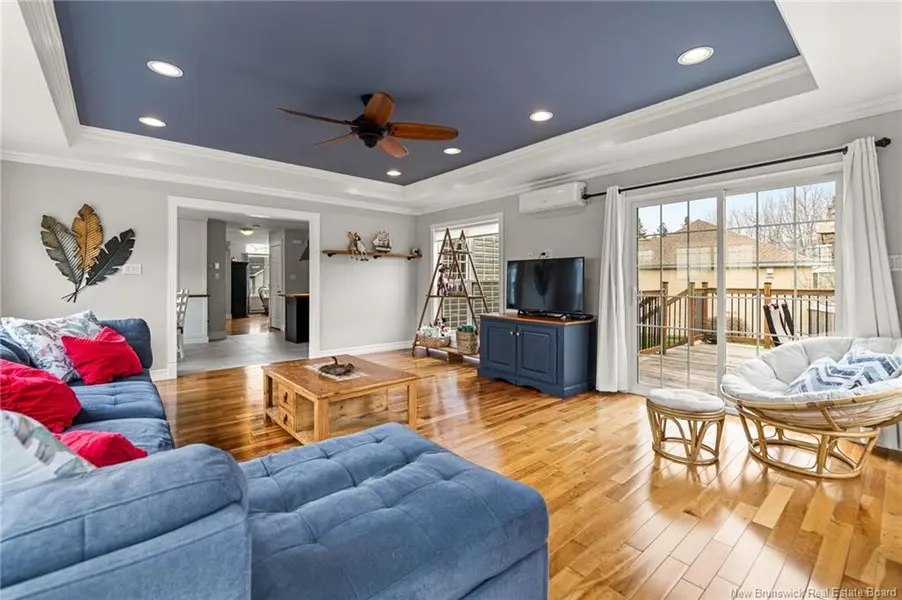
Camille Lemoine
Relocation Buyer purchased remotely
FREQUENTLY ASKED QUESTIONS (FAQ'S)
Why are people relocating to Moncton, Dieppe, and Riverview?
People are relocating to Greater Moncton for affordability, shorter commutes, and a high quality of life. The region offers strong employment opportunities, family-friendly communities, and easy access to nature, while remaining significantly more affordable than larger Canadian cities.
What is the cost of living like compared to other Canadian cities?
Which area should I choose: Moncton, Dieppe, or Riverview?
How competitive is the housing market for relocating buyers?
How long does it typically take to buy a home after relocating?
Can I buy a home in New Brunswick before moving here?
What should I know about New Brunswick homes before buying?
Are there good schools and healthcare services in the area?
What are average commute times in Greater Moncton?
How can a local Realtor® help with relocation?