Is Moncton a Good Place to Live in 2026? An Honest Look at the Numbers

Moncton has spent the better part of a decade on lists of Canada's fastest growing cities, and 2026 is no exception. Statistics Canada's most recent subprovincial estimates put the Moncton census metropolitan area at 2.9% population growth between July 2024 and July 2025, tied with Calgary and behind only Edmonton among all 41 metropolitan areas in the country. For a mid-sized Maritime city, that is a remarkable run.
But the headline number hides a shift that matters more to anyone deciding whether to move here. The engine driving Moncton's growth changed direction in the last reporting year, and most coverage of the city has not caught up to it. If you are weighing a move, that shift should change how you read every other statistic about this market.

The Growth Is Real, and It Is Still Near the Top of the Country
Start with what is not in dispute. Moncton grew 2.9% in the most recent Statistics Canada reporting year. Only Edmonton, at 3.0%, grew faster. Calgary matched Moncton exactly. Every other major Canadian metropolitan area, including Toronto, Vancouver, Montreal, and Halifax, grew more slowly.
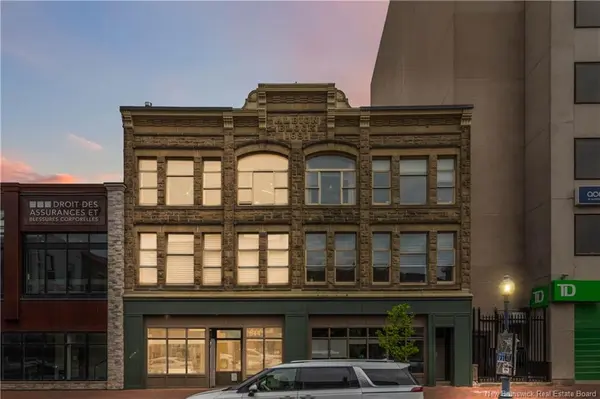
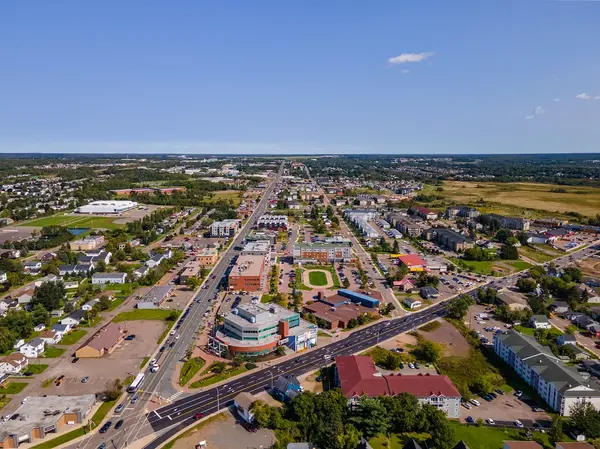
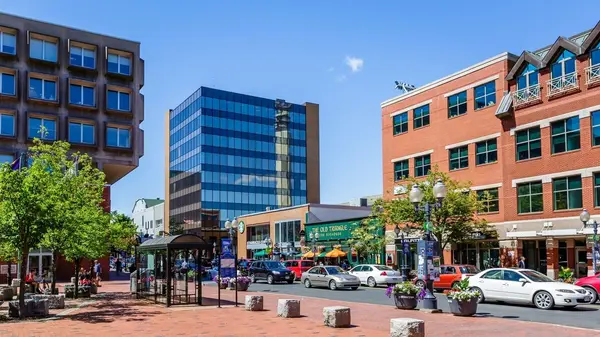
That growth shows up in ways you can see. Downtown has a skyline it did not have in 2019. The Avenir Centre anchors an entertainment district that did not exist a decade ago. Station Yards is building out a walkable district on former rail land. Retail, restaurants, and health services have followed the population, which is the sequence you want to see rather than the reverse.
Growth also shows up in the housing stock. The city approved a 4-unit residential zoning framework, adopted a pre-approved housing design catalogue, and committed $25 million in infrastructure alongside federal and provincial partners to unlock roughly 1,300 additional housing units around Elmwood Drive. A city that is not confident about its trajectory does not spend that way.
The Shift Almost Nobody Is Reporting
Here is the part that changes the analysis. In the same reporting period, Moncton recorded net interprovincial migration of negative 363 people. More Canadians moved out of Moncton to other provinces than moved in from them. Statistics Canada noted that all five Atlantic metropolitan areas hit their lowest interprovincial migration levels in at least four years.
Between roughly 2020 and 2023, Moncton's story was straightforward: buyers from Ontario sold a house in the Greater Toronto Area, moved east, paid cash, and still had money left over. That wave lifted prices sharply and quickly. It is over. Moncton's 2.9% growth is now carried almost entirely by international immigration rather than by equity-rich buyers arriving from other provinces.
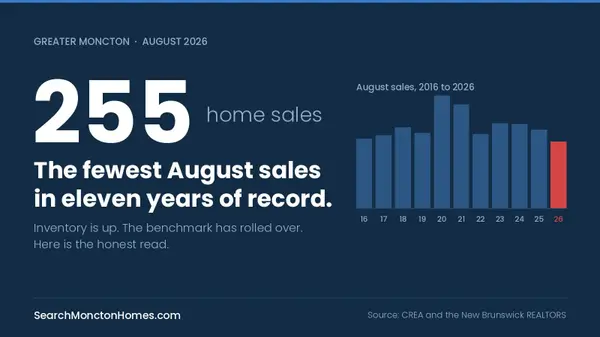
The implication is direct. New arrivals are more likely to rent first, more likely to be financing rather than paying cash, and more likely to be price-sensitive. That is why the market cooled into balance rather than continuing to run. Sales volume fell 11.6% in 2025 to 2,905 transactions while average prices rose only 2.4%. Demand did not disappear, it changed character.
For someone considering a move, this is good news. You are arriving after the speculative surge and into a market where you can negotiate, get a condition-laden offer accepted, and take time on an inspection. Buyers in 2021 had none of those luxuries.
What It Actually Costs to Live Here
The average residential sale price across Greater Moncton was $386,131 in 2025, up 2.4% from $376,784 the year prior. The 2026 forecast calls for roughly 2.7% price growth and a 1.8% increase in sales, which describes a normal market rather than a hot or falling one.
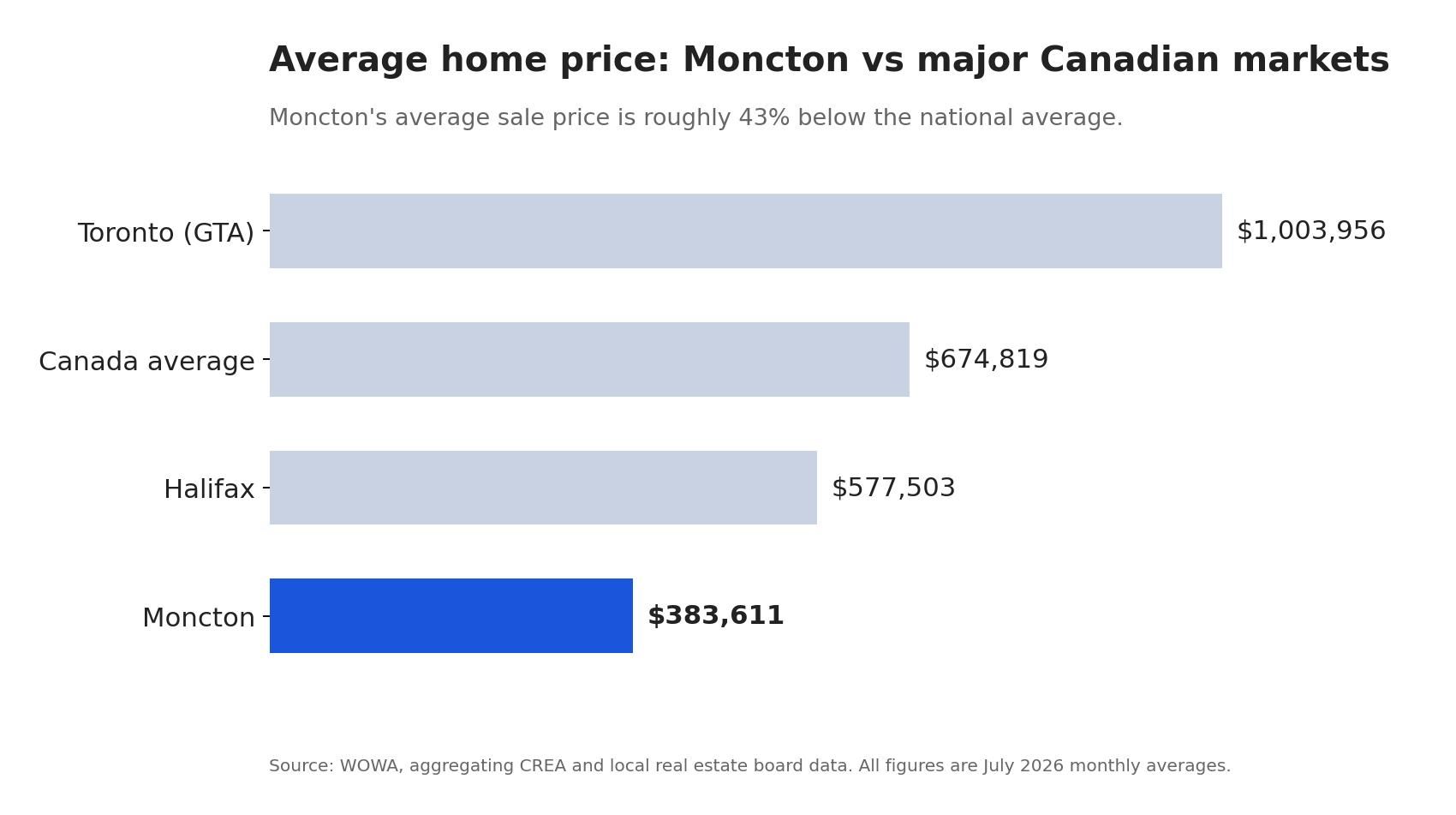
Put that number in context. The Canadian national average sat at $674,819 in July 2026 and the Greater Toronto Area average at $1,003,956. Moncton runs roughly 43% below the national average and about a third below Halifax. For a household earning a national-average income, Moncton is one of the few remaining Canadian cities where a single income can carry a detached home with a yard. That is the core of the value proposition, and it has not eroded.
Property taxes in New Brunswick are higher than many newcomers expect, and that surprises people who budget only on purchase price. Insurance and heating costs also run above the national average given the climate. Run the full monthly carrying cost, not just the mortgage payment. The affordability calculator and mortgage calculator are the fastest way to pressure-test a realistic budget before you start looking.
The Honest Downsides
Healthcare access is the most serious one. New Brunswick's primary care waitlist grew by roughly 40,000 people year over year as of early 2026, and the province has made clearing it a stated priority precisely because it has not been solved. If you or a family member has an ongoing medical condition that requires a consistent family physician, investigate this before you commit, not after. This is the single most common regret we hear from people who relocate here.
Wages are the second. Moncton's affordability advantage is partly a function of lower local salaries. If you are bringing a remote job with a Toronto or Calgary salary, the arbitrage is excellent. If you are job-hunting locally, model the actual local wage for your role rather than assuming your current compensation transfers.
Winter is real, and it is longer than newcomers from southern Ontario expect. Snow clearing is competent and life continues normally, but budget for winter tires, heating, and the fact that late March is not spring here.
Finally, the negative interprovincial migration figure is a signal worth respecting rather than dismissing. Some people who moved here during the boom have moved on. Usually the reasons are healthcare access, career ceiling, or distance from family. None of those are fatal objections, but they are the ones to test honestly against your own situation.
Who Moncton Is Actually Right For
Moncton is a strong fit if you are a remote worker with portable income, a family that wants a detached home and a yard without a 25-year amortization stretch, a bilingual professional who benefits from a genuinely two-language labour market, or an investor who wants positive cash flow on a duplex at an entry price that no major Canadian market offers.
It is a weaker fit if you need immediate, guaranteed access to a family physician, if your industry has a thin local employer base and you need on-site work, or if you are buying primarily for rapid appreciation. The 2.7% forecast is a stable market, not a speculative one.
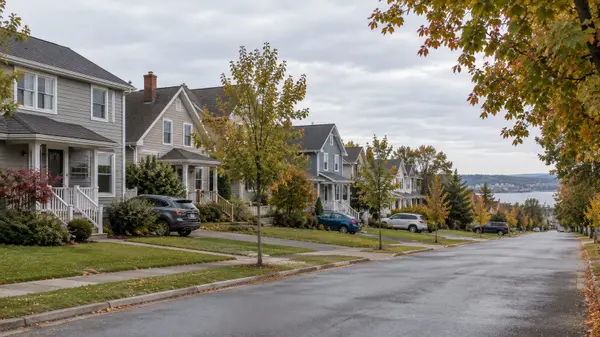
Within Greater Moncton, the choice of city matters as much as the choice of house. Dieppe is younger, francophone-majority, and newer-built. Riverview is quieter and family-oriented with strong schools. Moncton itself carries the widest range of price points and housing types. These are three distinctly different places to live, not one market with three labels.
The Bottom Line
Moncton in 2026 is a good place to live for the right buyer, and the case rests on affordability and quality of life rather than on the promise of fast appreciation. The city is still growing near the top of the national rankings, the infrastructure spending is real, and the market has settled into balance after a disorderly few years. That balance favours buyers who do their homework.
The honest caveat is that the easy money is behind us. Anyone selling you Moncton as the next explosive appreciation story is working from a 2021 script. What Moncton offers in 2026 is a detached home you can actually afford in a city that is still adding people, with healthcare access as the risk you need to price in personally.
If you are researching a move from outside the province, the Relocating to New Brunswick guide covers the practical mechanics. If you would rather skip the research phase and get a straight read on whether a specific neighbourhood or price point fits what you are trying to do, book a call and we will work through it together.
Candace McKay is a licensed Realtor with eXp Realty serving Moncton, Dieppe, Riverview, Shediac, and Memramcook. She works with buyers relocating to Greater Moncton from across Canada and abroad, and with local sellers pricing into a market that has shifted from a seller's market to a balanced one. Get in touch to talk through your situation.
Disclaimer: Market figures, population estimates, and forecasts referenced in this article are drawn from publicly available data including Statistics Canada subprovincial population estimates and published 2026 market outlooks, and are provided for informational purposes only. They do not constitute financial, investment, medical, or immigration advice. Individual circumstances vary.
Categories
Recent Posts