Moncton and Dieppe Receive $11.5 Million in Transit Funding, What It Means for Home Values and Development
The Announcement
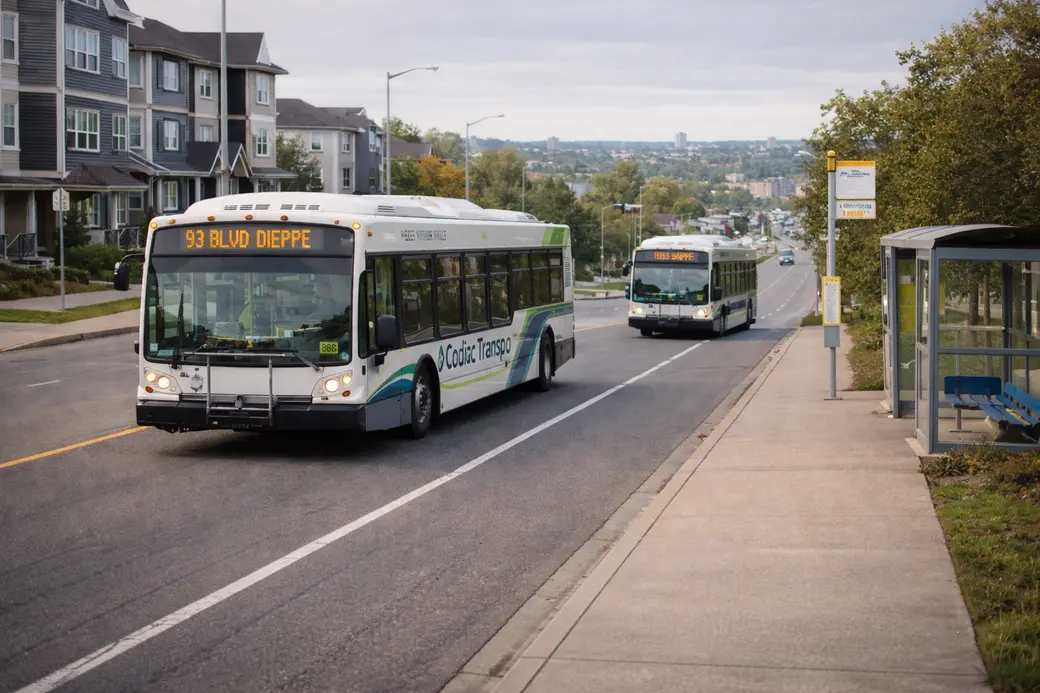
In March 2025, the federal government confirmed more than $11.5 million in transit funding for Moncton and Dieppe through the Canada Public Transit Fund's Baseline Funding stream. The allocation runs from 2026 to 2036, split as $9,863,450 for Moncton and $1,656,670 for Dieppe. The mandate is straightforward: upgrade, replace, or modernize public transit infrastructure across the Codiac Transpo service area.
Ten years of committed, predictable funding. That is the part that matters for real estate.
Why Transit Investment Is a Real Estate Signal
Transit investment does not just improve commute times. It is a long-term commitment from government to support density, growth, and liveability in a corridor. Every major Canadian market that has expanded public transit infrastructure has seen measurable property value increases within 800 metres of service routes, typically in the 5 to 15 percent range over a 5 to 10 year window.
Moncton and Dieppe are not at the scale of a metro transit expansion, but the dynamic is the same. When capital flows into infrastructure, it validates growth expectations. Developers follow. Density increases. Demand for housing along those corridors rises before supply catches up.
The Greater Moncton area has been absorbing significant population growth, driven by immigration and interprovincial migration. That growth puts pressure on transit. This funding is a response to demonstrated demand, not speculative planning. That is a meaningful distinction.
Which Areas Benefit Most
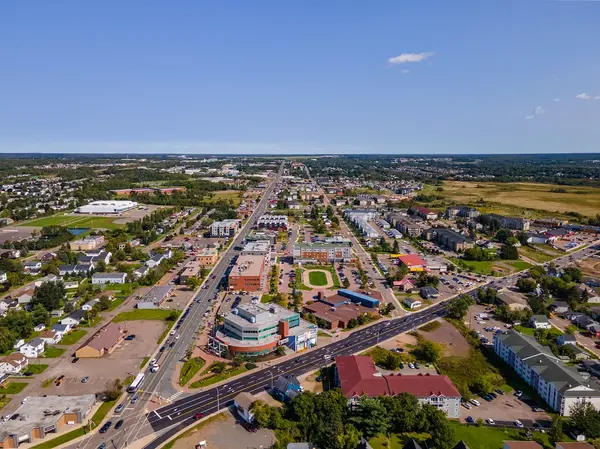
Codiac Transpo services both cities. Dieppe in particular has room to grow its ridership base as its population has expanded rapidly along corridors like Champlain Street and through the Melanson Road and Gauvin Road development zones. Infrastructure investment here supports the case for continued residential and mixed-use development in areas that were recently considered suburban fringe.
In Moncton, the Mountain Road, Main Street, and Mapleton Road corridors carry the highest transit volume. Properties within walking distance of these routes are already attracting a larger buyer pool, specifically younger professionals and newcomers who prioritize access over square footage.
What This Means for Buyers
If you are buying in the next 12 to 24 months, properties near established and expanding transit routes carry a structural advantage. The funding is confirmed, the timeline is locked in, and the improvements will happen. You are buying ahead of the value capture, not after it.
This is especially relevant for first-time buyers and investors targeting smaller units, condos, or multi-family properties in walkable pockets of both cities. The resale story in 5 years improves if transit access is part of the property's value proposition.
What This Means for Sellers
If you are selling a home within walking distance of a Codiac Transpo route, this announcement is part of your value story. Buyers who understand infrastructure investment, particularly investors and relocators from larger markets, will factor transit access into their offer calculus.
It is not the lead feature of every listing conversation, but in a competitive market, positioning your home as transit-accessible in a corridor receiving long-term federal investment is a legitimate differentiator. That context should be in your listing, your marketing, and your negotiating position.
The Bigger Picture
Moncton and Dieppe have been growing faster than most Canadian mid-sized cities. This transit funding is one more data point confirming that government at the federal level is treating this region as a growth corridor worth long-term investment. That has compounding effects on confidence, on development approvals, on employer decisions, and ultimately on housing demand.
The window between infrastructure announcement and value capture is where most buyers find the best positioning. That window is open now.

Joel Langlois | Moncton Real Estate
Local expertise • Data-driven pricing • Strategic marketing
Want to know which properties sit in the highest-upside corridors right now?
Contact Joel Langlois for a free market analysis or home valuation: sellingwithjoel@gmail.com
Categories
Recent Posts