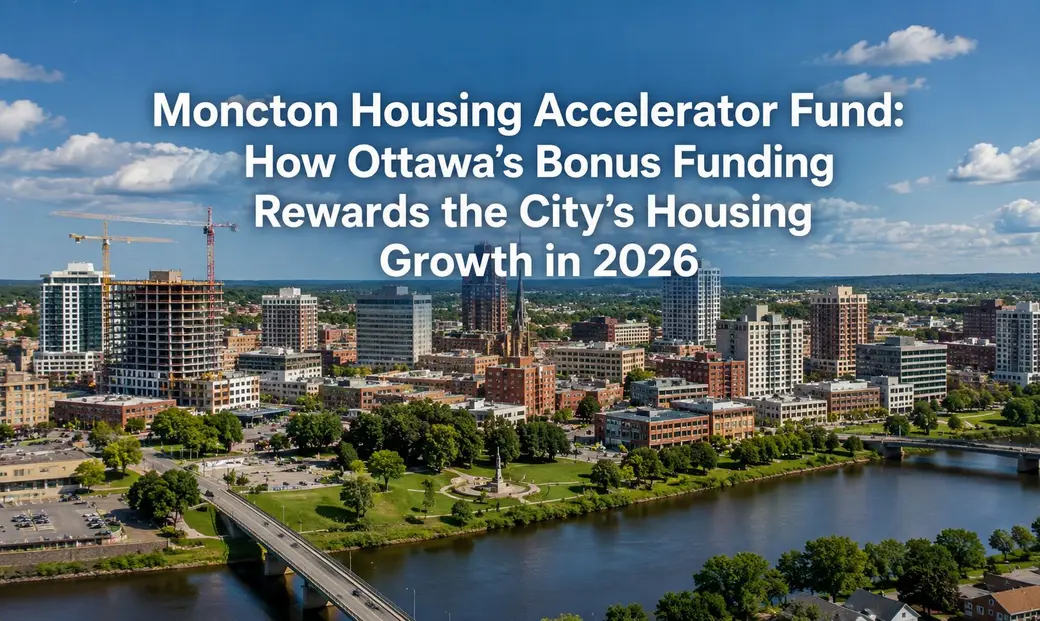
Moncton Housing Accelerator Fund: How Ottawa's Bonus Funding Rewards the City's Housing Growth in 2026
Ottawa just handed Moncton an extra $255,000 in Housing Accelerator Fund money, and the reason matters more than the dollar figure. The federal government clawed back millions from municipalities that failed to meet their housing reform commitments, then redistributed those funds to cities that are actually delivering. Moncton made the cut. That is a policy signal worth paying attention to if you own property here, or if you are thinking about buying.
The Housing Accelerator Fund has become a litmus test for which Canadian cities are serious about building housing and which ones are stalling. In New Brunswick, the contrast is sharp. One municipality lost $3.1 million for refusing to adopt zoning reforms. Moncton, on the other hand, exceeded its unit forecasts and stayed on track with its action plan. That distinction carries real consequences for development activity, builder confidence, and long-term property values.
What Happened with the Housing Accelerator Fund
The federal government launched the Housing Accelerator Fund to push municipalities toward faster permitting, zoning reform, and increased housing starts. Municipalities signed agreements with specific targets, including adopting four-unit-as-of-right zoning, streamlining approvals, and hitting unit construction benchmarks. In exchange, they received multi-year funding.
Ottawa recently redistributed $2.9 million in clawed-back funds across eight New Brunswick communities that are exceeding their commitments. Moncton received $255,000 of that total. The money came from municipalities that failed to follow through, most notably Miramichi, which lost its entire $3.1 million allocation after its council refused to adopt the required four-unit zoning changes. Tracadie also had its second annual payment cut in half after reporting significant delays in its action plan.
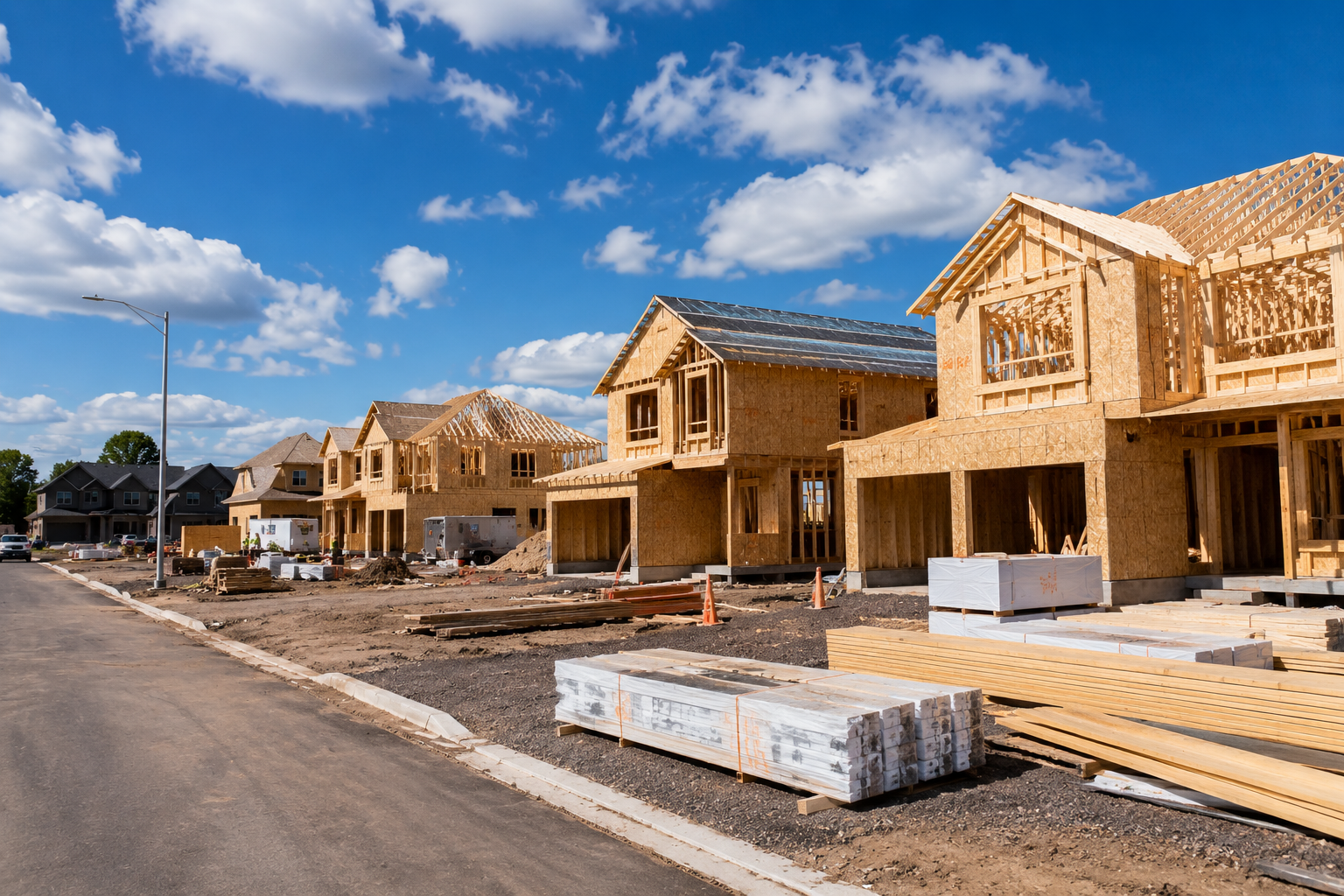
To qualify for the bonus allocation, a municipality had to be on track with its action plan and exceeding its unit forecasts. Moncton checked both boxes. The city's first-quarter building permits for 2026 already hit $114.8 million, with multi-unit residential leading the way. The pipeline is active, the permits are flowing, and the federal government is noticing.
Why It Matters for Real Estate
Federal housing funding is not charity. It is infrastructure capital that directly enables more lots, more services, and more buildable land. When a city receives bonus HAF funding, it means the conditions for new housing supply are being actively supported at the federal level. That translates to continued construction activity, which supports employment, retail demand, and population retention.
Moncton's original HAF agreement already committed the city to zoning reforms and permitting improvements. The city followed through on four-unit-as-of-right zoning in 2025, opening up single-family lots across the city for small-scale multi-unit development. That reform alone is reshaping the economics of infill properties, particularly in established neighbourhoods where lot values now carry additional density potential.
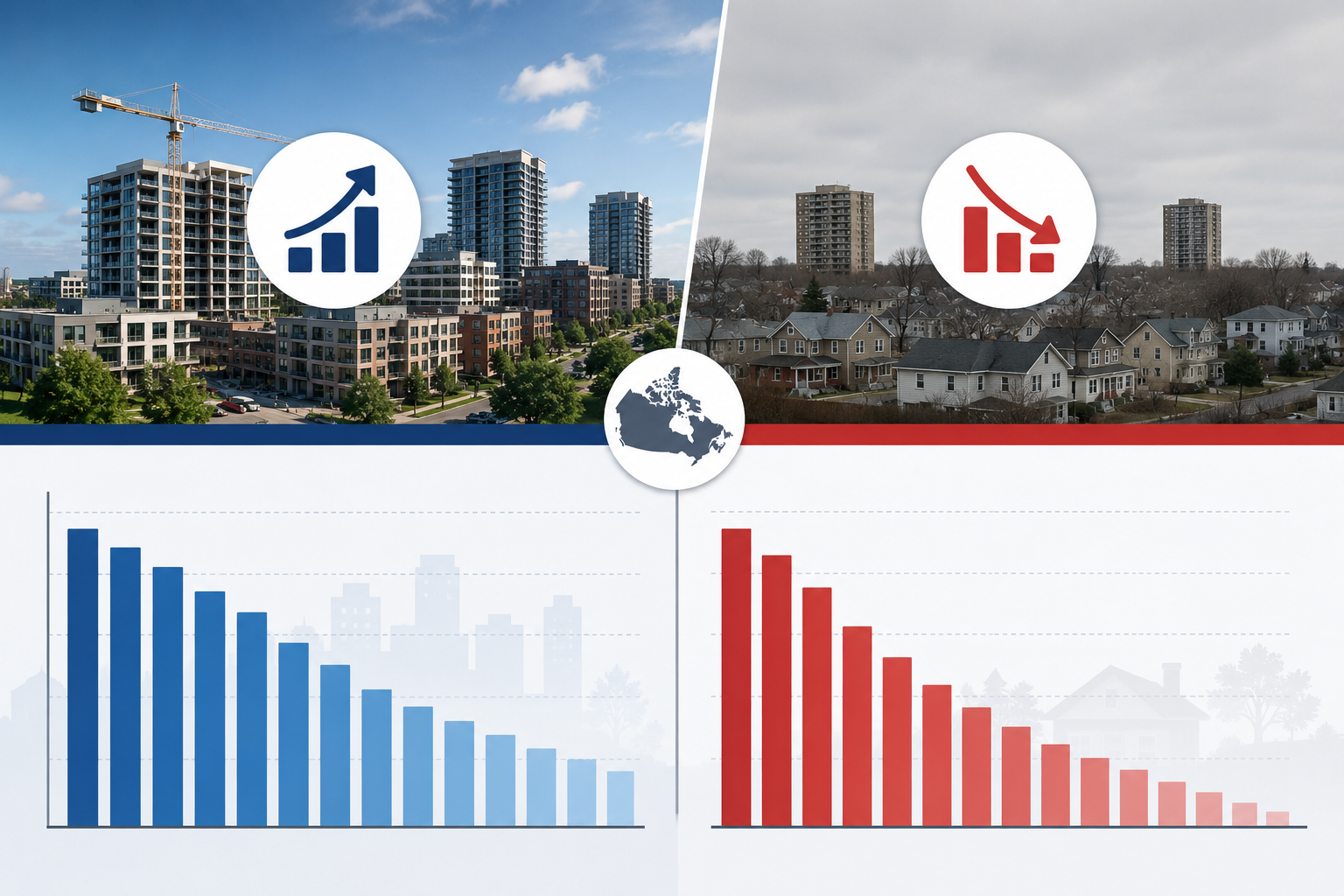
The contrast with municipalities that lost funding is instructive. When a city refuses to reform, it signals to builders and investors that the regulatory environment is hostile to new supply. Capital flows where the rules are clear and the approvals are predictable. Right now, Moncton is positioning itself as exactly that kind of market. Average residential sale prices in the Greater Moncton area increased 2.4% between 2024 and 2025 to $386,131, and the outlook calls for another 2.7% increase heading into 2026.
What It Means for Buyers and Sellers
For buyers, the HAF bonus is a positive supply signal. More funding means more serviced lots coming online, more multi-unit projects breaking ground, and a broader range of housing options in the pipeline. First-time buyers targeting affordable detached and semi-detached homes in the $350,000 to $425,000 range should see continued inventory growth, particularly in high-activity areas like Moncton North and the Moncton neighbourhoods benefiting from new infrastructure.
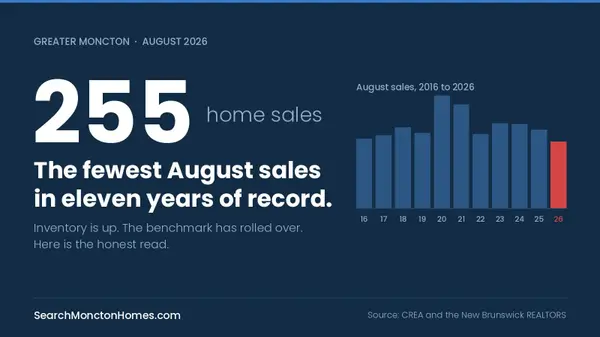
For sellers, the story is about sustained demand meeting a growing but manageable supply. The market is transitioning toward balanced conditions, but that does not mean prices are dropping. Listings are increasing and days on market are stabilizing, which means properly priced homes in desirable areas still move. Sellers in neighbourhoods that benefit from four-unit zoning, particularly those with larger lots, may find their properties attracting both traditional buyers and small-scale developers.
Investors should pay close attention. The HAF commitment to density reform, combined with Moncton's strong rental market fundamentals, low vacancy rates, and continued in-migration, makes the city one of the more compelling buy-and-hold markets in Atlantic Canada. Properties with conversion potential or existing multi-unit configurations carry additional strategic value in this environment. Browse current Moncton listings to see what is available.
Local Insight
The real takeaway from this HAF redistribution is not the $255,000. That is a small number in the context of a city issuing $114.8 million in building permits in a single quarter. The real takeaway is the signal it sends to the development community. Moncton is now on a federal shortlist of municipalities that are genuinely committed to housing growth. That reputation attracts capital, encourages builder confidence, and creates a virtuous cycle where more construction leads to more infrastructure funding leads to more construction.
Compare that to markets where councils are blocking density, refusing zoning reform, or losing federal funding. Those markets will see slower growth, less builder interest, and eventually, constrained supply with upward price pressure that benefits nobody except existing homeowners sitting on appreciating land. Moncton is choosing a different path, and the numbers are backing it up. If you are evaluating where to buy in New Brunswick, follow the infrastructure money. It tells you where the growth will be.
Ready to Make a Move?
Moncton's housing market is backed by federal policy, strong fundamentals, and active construction. Whether you are buying your first home, looking to invest, or considering a sale, the conditions are favourable for strategic action.
Disclaimer: Market figures cited in this article are based on publicly available data from industry reports and municipal sources. They are provided for informational purposes only and should not be interpreted as financial advice. Consult a qualified professional before making investment decisions.
Categories
Recent Posts