Relocating to Moncton: The Complete Guide for Out-of-Province Buyers (2026)
Joel Langlois | eXp Realty | March 2026
If you are planning to relocate to Moncton from Ontario, BC, or Alberta, you have likely already done the math. The cost-of-living differential is real, and it is significant. What most out-of-province buyers underestimate is not the price gap, it is how different the buying process, the market dynamics, and the neighbourhood decisions are from what they know.
This guide covers what you actually need to know. Not tourism talking points. Not general Atlantic Canada enthusiasm. The operational detail that helps you buy well when you are not already on the ground.
If you want a downloadable overview, the full Buyer relocation guide here.

Greater Moncton has become one of Atlantic Canada's fastest-growing cities, drawing buyers from across the country.
Why People Are Moving to Moncton
The interprovincial migration numbers are not subtle. Ontario, BC, and Alberta have been exporting residents to Atlantic Canada for several years, and Moncton consistently ranks near the top of the receiving end. The reasons stack logically.
Cost of living is the primary driver. Housing is the largest single line item, and the gap between what you can sell in Toronto or Vancouver and what you can buy in Moncton represents a genuine wealth event for many families. That gap does not show up in wage comparisons, but it shows up in balance sheets.
Moncton is the only officially bilingual city in New Brunswick, which matters for federally mobile workers, families with French-language education preferences, and anyone whose career operates in both official languages. The economic base has diversified meaningfully over the past decade, with logistics, healthcare, post-secondary institutions, and professional services all contributing to stability.
Atlantic immigration pathways, including the Atlantic Immigration Program and the New Brunswick Provincial Nominee Program, continue to bring skilled workers into the region, which sustains housing demand independent of interprovincial movement.
Remote work has removed the geographic constraint that kept many buyers tethered to high-cost metros. For workers whose income is not tied to a physical office in Toronto or Calgary, Moncton now competes directly on quality of life and financial position, and it wins on both.
What Your Money Buys Here
The comparison is stark enough to be uncomfortable for people who have spent years in the GTA or Metro Vancouver.
In 2026, $400,000 to $600,000 in Moncton buys a detached home with a garage, a yard, and a full basement. In Toronto, that same budget gets you a resale condo with parking, if you find one. In Calgary, you have more options, but detached freehold product in good school zones pushes past $650,000 in most cases.
Entry-level detached homes in Moncton exist at price points that have structurally disappeared from most major Canadian markets. That is not a temporary condition, it is a function of land availability, population density, and local income levels. It will compress over time as migration continues, but the gap remains wide.
Dieppe, Riverview, and Moncton North are the three primary zones for out-of-province buyers:
Dieppe offers the highest concentration of new construction. Builders are active, lots are available, and the infrastructure, schools, shops, and road access, is modern and expanding. It skews bilingual and is well-positioned relative to the airport and the Trans-Canada.
Riverview sits across the river from downtown Moncton. Established neighbourhoods, larger lots, quieter streets, and solid school options make it the default choice for families who want suburban space without being on a new-build street where half the homes are still under construction.
Moncton North is the value play. Older stock, central location, and strong proximity to hospital, universities, and commercial corridors. If you are buying with cash-flow thinking or prioritizing location over newness, North Moncton warrants serious consideration.
Property taxes in New Brunswick are assessed at the provincial level. Effective rates are higher than Ontario on a percentage basis but substantially lower on an absolute dollar basis when the asset values are compared. A $500,000 home in Moncton generates a fraction of the tax burden of an equivalently valued Toronto property, and the values are not equivalent.
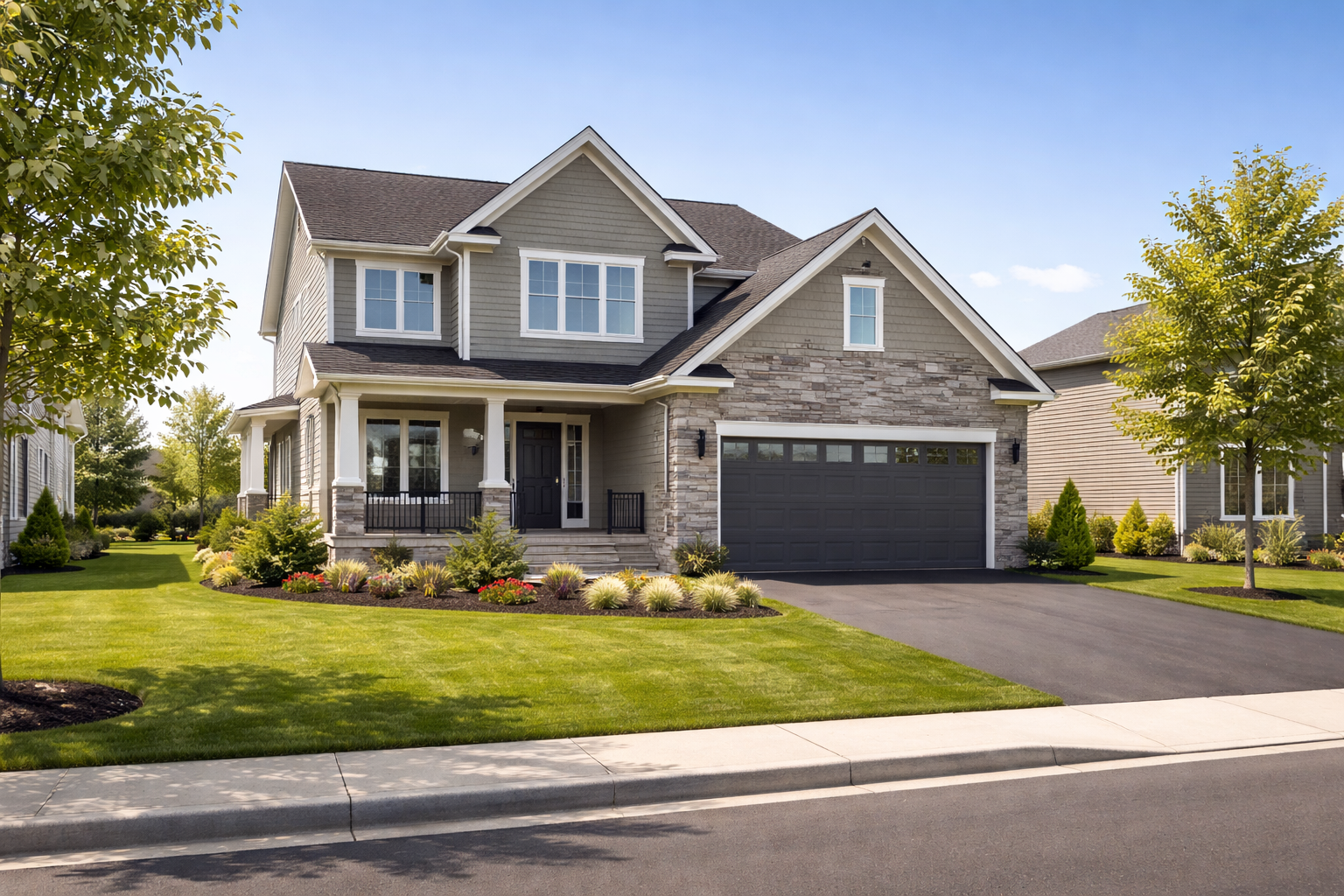
Detached homes with garages and yards are still attainable in Moncton at price points that have largely disappeared in Ontario and BC.
How to Buy Remotely
Remote purchases are increasingly common in Moncton. The process works, but it works better when you understand where the friction points are.
Virtual tours and video walkthroughs have improved significantly, but they do not replace physical presence for condition assessment. A well-shot video tells you the layout and the finishes. It does not tell you what the basement smells like, whether the furnace sounds rough, or how the neighbourhood actually feels at 7pm on a Tuesday. A local agent who does physical walkthroughs on your behalf fills that gap.
The most common mistake out-of-province buyers make is treating offers the same way they were forced to in Toronto. In hot GTA conditions, waiving inspection became normalized out of competitive necessity. Moncton is not that market. Conditional offers are common, accepted, and advisable, particularly when you are not in a position to visit before committing. A pre-offer inspection, done before you submit, can give you clean information without needing a condition at all. Your agent should be coordinating that for you.
The conditions that matter most in a remote purchase: financing (standard), home inspection (essential when buying without a visit), and for condos, status certificate review. On new builds, you also want to understand what the builder's agreements include regarding warranty coverage in NB, occupancy timelines, and deposit structure.
If you can visit once, time it after an accepted conditional offer. Use the inspection period window to be physically present. You get real information, you meet your lawyer, and you reduce the information asymmetry that remote purchasing creates.

Understanding the New Brunswick Purchase Process
The NB process is not dramatically different from other provinces, but the specifics matter when you are buying from away.
Offers are submitted on standard NB real estate forms. Conditions are written in and a timeline is negotiated, typically five to ten business days for inspection and financing conditions on a resale property. Both parties sign. The deposit is paid upon firm acceptance, usually held in trust by the listing brokerage or the buyer's lawyer.
Timelines from accepted offer to closing typically run 30 to 60 days on resale. New construction timelines vary widely depending on build stage. If you are buying a pre-construction or early-build property, closing timelines can extend to six to twelve months. Get the occupancy date in writing and understand what happens if it shifts.
Legal costs in NB include lawyer fees (typically $1,200 to $1,800 for a standard residential purchase), disbursements, title insurance, and land transfer tax. NB land transfer tax is calculated on the assessed value or purchase price, whichever is higher. The rate is 1% on the first $250,000 and 1.5% on the balance. On a $500,000 purchase, that is approximately $6,250. Modest by Ontario or BC standards.
HST applies to new construction. On resale, no HST. If you are buying a newly built home or a substantially renovated property, factor HST into your acquisition cost. The NB HST rate is 15%. There are rebate programs for primary residences that reduce the effective hit, but your lawyer and accountant should model this before you firm up.
Neighbourhoods for Out-of-Province Buyers
The full neighbourhood breakdown is available in a separate post, but the short version for out-of-province buyers is below. Each area suits a different buyer profile, and getting this decision right matters more when you are not already familiar with the geography.
Dieppe is the go-to for buyers who want new construction, bilingual community infrastructure, and a suburb that is still actively building. If your priority is a new home with a warranty and modern finishes, Dieppe is where most of that inventory sits. It also has the strongest French-language school access in the region.
Riverview suits buyers who want established character, proximity to green space, and a quieter pace than central Moncton. The Coverdale Road corridor and the areas near Gunningsville Boulevard offer solid family homes with mature trees and larger lots. School quality is consistent. Commute to downtown Moncton via the Gunningsville Bridge is under ten minutes.
Moncton North covers several distinct sub-areas. Berry Mills, Hildegard, and the areas around Mountain Road offer a mix of older bungalows and newer infill. The value is real. The trade-off is that you are buying older stock that may require capital. For buyers who can renovate or who are purchasing with investment intent, this zone warrants a detailed look.
Use the interactive map search to filter by zone and price point.

Dieppe continues to attract out-of-province buyers with its new builds, bilingual community, and proximity to Moncton's amenities.
What to Expect From the Moncton Market in 2026
Moncton is not a bidding war market in the Toronto sense, but it is not soft either. Well-priced homes in desirable zones move in days, not weeks. The market is competitive without being irrational, which is a meaningful distinction.
Days on market for well-positioned listings in Dieppe and Riverview typically run under two weeks. Overpriced properties sit longer, which creates opportunity if you have the patience and the local intelligence to identify them. Price trajectory has been upward over the past three years, moderated compared to 2021 and 2022, but consistently positive.
The most reliable piece of advice for out-of-province buyers: calibrate your expectations with a local agent before you submit an offer. Buyers who have been conditioned by Toronto competition sometimes overbid on Moncton properties out of fear, paying $20,000 to $40,000 above what a properly anchored offer would have secured. That gap is not recoverable. It also signals to listing agents that you are not market-aware, which affects subsequent negotiations.
Know what you are buying before you bid. Understand comparable sales in the specific sub-market. Let your offer reflect the real competitive situation, not the anxiety of being remote.

Understanding the NB purchase process before you make an offer reduces risk and speeds up your timeline.
The Bottom Line
Moncton is one of the best-value markets in Canada for buyers relocating from high-cost cities. The gap between what you sell in Toronto, Vancouver, or Calgary and what you can buy here is not a small rounding error, it is a material financial event. Used strategically, it means buying a better home, carrying less debt, or deploying capital elsewhere entirely.
The buyers who execute this well are the ones who treat the move as a capital allocation decision, not just a lifestyle change. They hire a local agent who understands the sub-market dynamics, they structure their offer to reflect actual competitive conditions, and they handle due diligence through a proper inspection process rather than cutting corners.
If you are planning a move and want to work through the numbers on what your current property equity buys here, book a call. No pitch, no pressure. A direct conversation about what the math actually looks like for your situation.
You can also get a current home value estimate if you are still in the early planning stage.

Joel Langlois | Moncton Real Estate
Local expertise • Data-driven pricing • Strategic marketing
Categories
Recent Posts